Ask most travellers to picture East Africa and two images come to mind: vast golden plains filled with wildlife, and tall figures wrapped in vivid red cloth, watching over their cattle. The Maasai are among the best-known peoples in Africa, and a Maasai cultural experience in the Serengeti ecosystem is one of the most meaningful ways to deepen a safari. Done well, it moves beyond a photo opportunity and becomes a genuine exchange of stories, skills, and perspectives. This guide explains who the Maasai are, what a visit involves, how to choose an ethical experience, and how to fit it into your Tanzania itinerary.
Who Are the Maasai?
The Maasai are a semi-nomadic pastoralist people who live across northern Tanzania and southern Kenya and speak Maa, a Nilotic language. For generations their way of life has centred on livestock, particularly cattle, which carry social, economic, and spiritual importance. Wealth, status, and identity have traditionally been tied to the health of the herd and the strength of the community.
Maasai society is organised around age sets. Boys progress through defined stages, from childhood to warrior (moran) to elder, each marked by ceremonies and responsibilities. Elders guide decisions, while warriors have traditionally protected people and livestock. Women hold central roles in building homes, raising children, managing household resources, and creating the beadwork for which the Maasai are celebrated.
The Maasai and the Serengeti Landscape
The name “Serengeti” is widely believed to come from the Maa word siringet, often translated as “the place where the land runs on forever.” That origin reflects how deeply the Maasai relationship with this landscape runs.
It helps to understand the geography accurately. Maasai communities live in the wider Serengeti ecosystem, including villages bordering the national park and areas around the Ngorongoro Conservation Area, where people, livestock, and wildlife share a protected landscape. Permanent residence inside the national park itself is not permitted, so cultural visits usually take place in villages just outside the park boundaries or along common safari routes. Knowing this keeps expectations realistic and helps you ask informed questions during your visit.
What a Maasai Cultural Experience Involves
Formats vary, but a well-run visit generally includes several elements.
A welcome and introduction. Visitors are typically greeted by community members and introduced to a village leader or guide who explains the village’s structure and traditions.
Traditional songs and dance. The best-known performance is the adumu, often called the jumping dance, in which warriors leap high from a standing position while others sing in rhythmic chorus. Beyond the spectacle, it traditionally showcases strength and community pride.
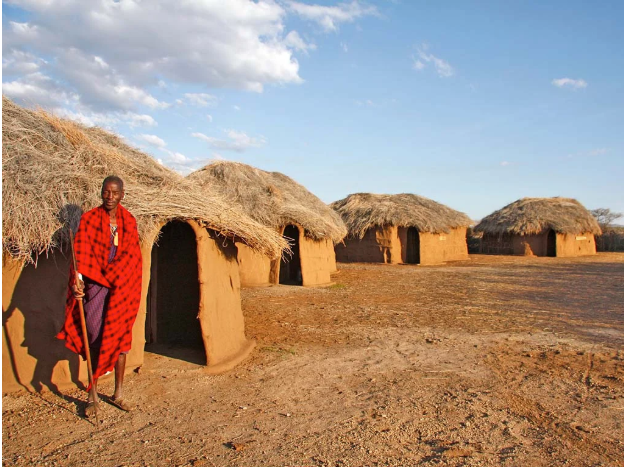
A look inside a traditional home. Maasai homes are built by women from timber, mud, and dung, and they are low, compact, and well suited to the climate. Stepping inside offers insight into daily domestic life, from cooking arrangements to sleeping spaces.
Livestock and daily routines. Guides often explain how herds are managed, how grazing decisions are made, and why cattle remain so important. Some visits include a walk with herders.
Crafts and beadwork. Women create jewellery, belts, and ornaments in carefully chosen colours, each carrying cultural meaning. Buying directly from the artisans is one of the most direct ways to support the community.
Skills and demonstrations. Visitors may be invited to try fire-making with traditional methods, learn about medicinal plants, or hear how the Maasai read the land and weather.
Conversation. The most valuable part is often the open discussion. Good hosts welcome questions about education, health, climate pressures, and how traditions are evolving.
The Meaning Behind the Red Shuka
The red cloth worn by Maasai men and women, called the shuka, is instantly recognisable. Red holds strong cultural significance and is commonly associated with courage and strength. Patterns and colours of beadwork also communicate information, such as age, marital status, and social standing. Asking a guide to explain these details turns a visual impression into real understanding.
Why a Cultural Visit Enriches Your Safari
A safari focused only on wildlife captures half the story. People and animals have shared this landscape for centuries, and the Maasai perspective reveals how coexistence works in practice. Guests often leave with a richer appreciation of conservation because they have seen it as a lived reality rather than an abstract idea.
There is also a human reward. After days of watching predators and herds from a vehicle, an afternoon of conversation, music, and shared curiosity offers a welcome change of pace and often becomes a trip highlight, especially for families and first-time visitors.
How to Choose an Ethical Experience
Cultural tourism can strengthen communities or turn traditions into performance for profit. A few principles help you choose responsibly.
- Look for community ownership. Experiences managed by the community, with fair and transparent revenue sharing, deliver the most benefit.
- Ask where the money goes. Entry fees should support schools, clean water, healthcare, or local development, not only a middleman.
- Avoid staged or rushed visits. An authentic experience allows time for conversation, not a quick tour followed by a sales pitch.
- Prefer small groups. Fewer visitors mean more meaningful interaction and less disruption to village life.
- Check with your operator or camp. A reputable provider can arrange a visit with a community it knows and trusts.
Etiquette and Respect
Good manners go a long way. Greet your hosts warmly and listen before you ask. Always request permission before photographing individuals, and be ready to accept a no. Some communities request a small fee for photographs, which should be agreed openly in advance. Dress modestly, avoid assumptions, and treat questions as chances to learn rather than to judge. Supporting local artisans through fair purchases shows respect in a tangible way. Remember too that you are a guest in a living community, not an exhibit.
Combining a Maasai Visit With Your Serengeti Stay
Cultural experiences fit naturally into a wider itinerary. Many travellers schedule a visit on a day between longer game drives, or on the way to or from the Ngorongoro Crater, since the area is closely associated with Maasai pastoralism.
Where you stay also matters. Camps that build relationships with neighbouring communities, hire locally, and arrange respectful visits can offer a more authentic experience. At Serengeti House of Nature, for example, guests are invited to engage with the vibrant Maasai community, learn their traditions, take part in dances, and gain a deeper understanding of the harmony between people and nature, all within an eco-conscious setting in the Ikoma area. Choosing accommodation with that commitment makes cultural encounters feel connected to the rest of your stay rather than tacked on.
Best Time for a Cultural Visit
Cultural visits run year-round, so timing can follow your wildlife plans. The dry season from June to October tends to offer easier road conditions and comfortable days, while the green season from November to May brings lush landscapes and fewer visitors, though rain can occasionally affect access. Mornings and late afternoons are usually the most pleasant, with softer light and cooler temperatures. Confirm timing with your operator, as community schedules and events can vary.
Practical Tips Before You Go
- Allow one to two hours for a meaningful visit.
- Bring a hat, sunscreen, and sturdy shoes for uneven ground.
- Carry small cash for crafts and agreed fees.
- Bring curiosity and an open mind.
- Ask your guide to explain what you are seeing and why.
Conclusion
A Maasai cultural experience in the Serengeti adds depth, context, and humanity to any safari. It shows how one of Africa’s most enduring cultures has lived alongside wildlife for generations, and it offers travellers a chance to listen, learn, and connect. The key is approaching it with respect: choose community-led visits, ask thoughtful questions, follow good etiquette, and make sure your spending supports the people who share their world with you. Do that, and you will bring home more than photographs. You will bring home an understanding of the Serengeti that no game drive alone can provide.
Key Takeaways
- The Maasai are semi-nomadic pastoralists whose culture centres on cattle, community, and age-set traditions.
- Cultural visits usually take place in villages bordering the park, since permanent residence inside the national park is not permitted.
- Typical activities include dance, home visits, craft demonstrations, and open conversation.
- Ethical visits are community-run, transparent about fees, and unhurried.
- Always ask before taking photos and buy crafts fairly.
- Choosing a camp that works respectfully with local communities improves authenticity.
Frequently Asked Questions
What is a Maasai cultural experience?
It is a guided visit to a Maasai village or community where guests learn about traditions, music, crafts, homes, and daily life through demonstration and conversation.
Do the Maasai live inside the Serengeti National Park?
No. Permanent residence inside the national park is not allowed. Maasai communities live in the wider ecosystem, including villages near the park boundary and the Ngorongoro Conservation Area.
How long does a cultural visit take?
Most visits last one to two hours, though some experiences can be extended to include a guided walk or a shared meal.
Is it ethical to visit a Maasai village?
It can be, provided the visit is community-led, fees are transparent, and benefits reach local people. Ask your operator how the experience is organised and how the revenue is used.
Can I take photographs?
Usually yes, but always ask permission first, especially for portraits. Some communities request a small fee, which should be agreed beforehand.
Is the experience suitable for children?
Yes. Children often enjoy the music, dancing, and hands-on demonstrations. Supervise them so they stay respectful of the community’s customs.
Should I bring money?
Yes. Bring small cash for beadwork and crafts, which is one of the most direct ways to support families.